

Case Studies
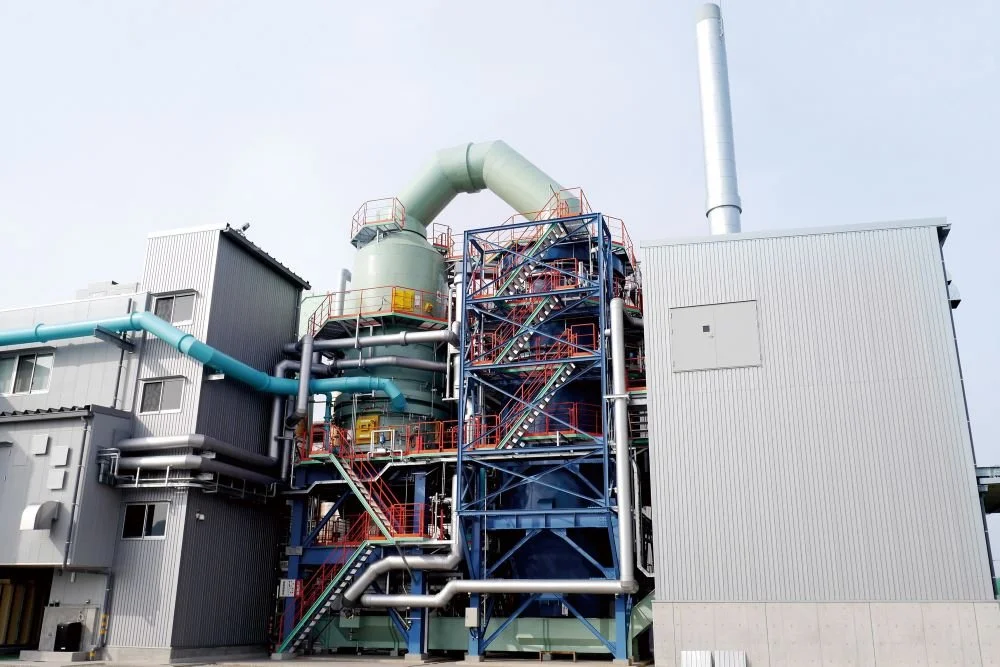
Validated Performance for Sustainable Waste Solutions
At Plantec Asia Pacific, we are committed to providing solutions backed by rigorous scientific data and long-term operational success. The Vertical Combustor, our next-generation incineration technology, has been proven for its superior efficiency and reliability through years of research and extensive field application.
In this section, we present a collection of technical white papers and operational studies, ranging from medical waste treatment optimization to a comprehensive ten-year performance record. We believe these documents provide the essential evidence for stakeholders seeking to balance environmental compliance with long-term economic viability.
Proven Excellence
Technical Validation and Operational Success
Download White Papers
A Decade of Excellence
10-Year Performance Data Proving Long-Term Durability
Ten-Year Operational Record of Vertical Combustor
This paper presents the 10-year operational record of the Vertical Combustor at Tanegashima Clean Center, which was the first fully continuous-combustion model for municipal solid waste delivered in 2012. Operating as a single-train facility on a remote island in Japan, the system has demonstrated exceptional reliability with high availability and stable treatment of diverse waste types. Key performance indicators, including CO concentrations consistently below 10 ppm and minimal ignition loss, verify its environmental compliance. Furthermore, the simple mechanical structure has required no grate replacements over the decade, proving the system's long-term durability and cost-effectiveness.
Proven Reliability
A Performance Report on Modern Medical Waste Incineration
Operation Status of Medical Waste Treatment Facilities
Medical waste presents significant challenges for stable, complete combustion due to its diverse composition and the sealed-container feeding method used at treatment facilities. Plantec’s Vertical Combustor was developed to address these challenges by enabling the incineration of medical waste without auxiliary fuel. This paper compiles publicly available operational data from multiple Japanese facilities that primarily treat medical waste. The analysis confirms that facilities equipped with the Vertical Combustor have maintained high throughput and stable operation over long periods—exceeding 20 years in some cases—while achieving low ignition loss and high environmental performance. These results demonstrate the technology’s long-term reliability and suitability for medical waste treatment.
Operational Flexibility
Optimizing Cost and Efficiency in Intermittent Plant Cycles
Approximately 35% of municipal solid waste incineration facilities in Japan operate on an intermittent basis, but daily startup and shutdown increase fuel consumption. The Mitsuke Clean Center, using a Vertical Combustor™, retains a heat-storing ash layer, enabling rapid startup and shutdown without emptying the furnace. When startup, waste is loaded simultaneously with burner ignition, and combustion proceeds through drying, pyrolysis, residue burning, and sequential ash removal. The Turbo Chemical Baghouse™ efficiently removes dioxins, mercury, and harmful substances, even during non-steady operation, without bypass ducts. Operational data show startup in 30 minutes, shutdown in 1.5 hours, fuel consumption less than 20 L per furnace per day, and dioxin levels during standby period well below limits. The system effectively shortens startup/shutdown times, reduces fuel consumption, and ensures stable emission control, supporting efficient intermittent operation.
Intermittent Operation of Vertical Combustor
Complete Combustion
Precision Analysis of Waste Residence Time for Complete Incineration
Estimation of Waste Residence Time in Vertical Combustor
Waste incineration aims to reduce waste volume and unburned content in residues, easing landfill burden. This study examines the Vertical Combustor, a system that achieves very low unburned carbon (ignition loss) in ash due to its extended residence time—from the time waste is input until it is discharged as incineration ash. Tracer tests and calculations based on waste and ash properties show that the residence time is approximately 16 to 20 hours—about ten times longer than standard stoker incinerators—allowing nearly complete combustion.
Optimized Air Ratio
The Science Behind High-Performance Vertical Combustion Technology
Investigation of Combustion Mechanism in Vertical Combustor
This study examined pyrolysis and combustion process of municipal solid waste in a Vertical Combustor. Combustion gas was sampled at multiple points within the waste layer to clarify how primary air a0ects the process. At a primary air ratio of 0.4, O₂ rapidly decreased while CO₂, CO, H₂, and hydrocarbons increased, indicating that pyrolysis and combustion occurred throughout the waste layer. In contrast, at a ratio of 0.5, O₂ remained nearly constant between the furnace bottom and the lower layer, with minimal generation of combustible gases, and rapid O₂ consumption occurred only in a limited upper region. These results demonstrate that even small changes in primary air ratio can significantly influence pyrolysis gas production and the combustion process, suggesting the existence of an optimal air ratio for e0icient waste combustion.